We Work With All Insurances – No Hassle, No Delays, Just EXPERT WATER DAMAGE Restoration

Residential Water Damage Restoration for Central Texas Homeowners
Learn how water damage restoration helps Central Texas homeowners with emergency extraction, structural drying, mold removal, cleanup, and repairs.
7/17/20269 min read
What Central Texas Homeowners Should Know About Water Damage Restoration
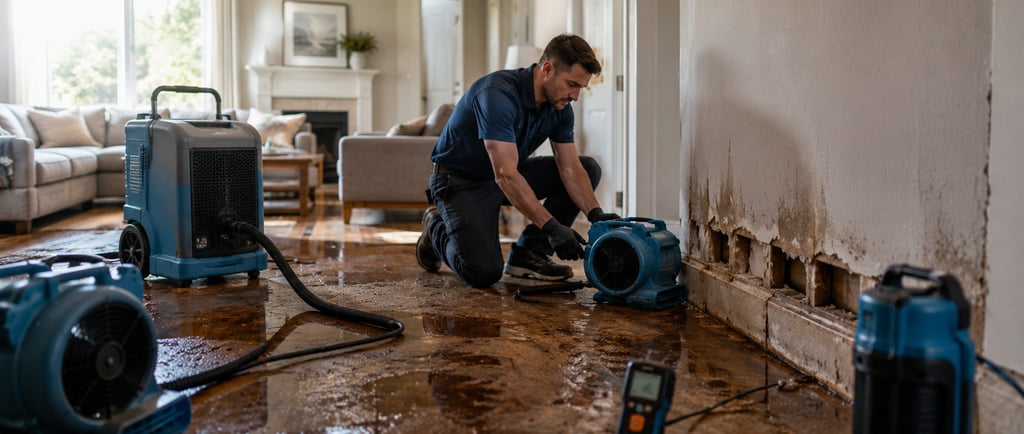
Water damage can happen suddenly and spread through a home much faster than most homeowners expect. A broken plumbing line, overflowing appliance, roof leak, water heater failure, or severe storm can allow water to reach flooring, drywall, cabinets, insulation, and structural materials within minutes.
For homeowners in Austin, Georgetown, and surrounding Central Texas communities, removing visible water is only the first step. Moisture may continue spreading beneath floors, behind walls, inside cabinets, and through other building materials even after the affected area appears dry.
Residential water damage restoration addresses both the visible damage and the hidden moisture left behind. The process may involve emergency water extraction, professional moisture detection, structural drying, cleaning, mold removal, damaged-material removal, and reconstruction.
Understanding how the restoration process works can help homeowners respond quickly, make informed decisions, and reduce the risk of more extensive property damage.
What Is Residential Water Damage Restoration?
Residential water damage restoration is the professional process of removing water, drying the affected structure, cleaning the property, and repairing materials damaged by leaks, flooding, plumbing failures, or other water-related events.
The goal is not simply to remove standing water. A complete restoration must also identify how far the moisture has traveled and determine whether it has reached areas that cannot be inspected from the surface.
Depending on the severity of the damage, the restoration process may include:
Emergency water extraction
Moisture inspections and mapping
Structural drying
Dehumidification
Removal of unsalvageable materials
Cleaning and sanitizing
Mold removal or remediation
Drywall, flooring, ceiling, or cabinet repairs
Reconstruction of affected areas
Each stage plays an important role in returning the home to a dry, stable, and usable condition.
Common Causes of Water Damage in Central Texas Homes
Homes throughout Austin, Georgetown, and Central Texas can experience water damage from many different sources.
Some incidents are immediately visible, such as an overflowing bathtub or a burst pipe. Others begin as small leaks that remain hidden behind appliances, cabinets, walls, or flooring.
Common causes of residential water damage include:
Burst or leaking plumbing lines
Water heater failures
Washing machine hose leaks
Dishwasher leaks
Refrigerator supply line failures
Toilet, sink, or bathtub overflows
Air-conditioning condensate line problems
Roof leaks after heavy rain
Stormwater entering the property
Slab leaks
Sewer backups
Water entering around windows or doors
Even a relatively small leak can create extensive damage when it continues unnoticed. Water may move beneath flooring, soak into drywall, damage cabinets, or reach adjoining rooms before a homeowner realizes there is a problem.
Why Water Damage Requires a Fast Response
Water does not remain confined to the place where it first appears. Porous materials can absorb moisture and carry it into surrounding areas.
For example, water released in a kitchen may spread beneath cabinets, flooring, baseboards, and nearby walls. A plumbing leak on the second floor may affect the ceiling, insulation, drywall, and electrical components on the floor below.
The longer moisture remains inside the property, the greater the risk of:
Warped or buckled flooring
Swollen cabinets
Damaged drywall
Wet insulation
Peeling paint
Wood deterioration
Musty odors
Mold growth
Structural damage
More extensive reconstruction
A fast professional response can help limit the affected area and improve the likelihood of saving building materials.
Signs of Hidden Water Damage
Water damage is not always obvious. A home may have hidden moisture even when there is no visible standing water.
Homeowners should watch for warning signs such as:
Discolored walls or ceilings
Bubbling or peeling paint
Warped hardwood or laminate flooring
Loose tiles
Swollen cabinets or vanities
Soft drywall
Musty odors
Visible mold or mildew
Higher indoor humidity
Water stains near windows or doors
Unexplained increases in water bills
Sounds of running water when fixtures are off
These signs may indicate that moisture is present behind walls, beneath flooring, inside cabinets, or within other concealed areas.
A professional moisture inspection can help determine how far the water has traveled and which materials have been affected.
What Should Homeowners Do After Discovering Water Damage?
Safety should always come first.
Homeowners should avoid entering areas where standing water may be in contact with electrical outlets, appliances, wiring, or damaged building materials.
When it is safe to do so, take the following steps:
Turn off the source of the water.
Shut off the main water supply if necessary.
Avoid using electrical devices in wet areas.
Move furniture and valuables away from the affected area.
Take photographs and videos of the visible damage.
Avoid removing permanently installed materials before documenting them.
Contact a professional water damage restoration company.
Notify the insurance provider when appropriate.
Do not wait to see whether the area dries naturally. Surface moisture may disappear while water remains trapped inside walls, flooring, insulation, cabinets, or structural materials.
What Happens During Residential Water Damage Restoration?
Every water damage situation is different, but professional restoration generally follows several important stages.
Emergency Inspection and Damage Assessment
The restoration process begins with an inspection of the property.
The restoration team identifies the source of the water, determines which areas have been affected, and evaluates potential safety concerns. Flooring, walls, ceilings, cabinets, and other building materials may be inspected for visible and hidden moisture.
The assessment also helps determine whether the water may contain contaminants and whether any materials need to be removed.
Based on the findings, the restoration team creates a plan for extraction, drying, cleaning, and repairs.
Emergency Water Extraction
Standing water should be removed as quickly as possible.
Professional emergency water extraction uses commercial pumps, extractors, and specialized equipment to remove water from floors, carpeting, rooms, and other affected areas.
Removing water quickly can help reduce drying time, limit the spread of moisture, protect building materials, and lower the risk of mold growth.
Extraction may also involve moving furniture, removing wet carpet padding, lifting flooring, or accessing water trapped beneath cabinets and other materials.
Moisture Detection and Mapping
A room may appear dry while moisture remains inside the structure.
Restoration professionals use equipment such as moisture meters, thermal imaging cameras, hygrometers, and moisture-mapping tools to inspect areas that cannot be evaluated visually.
These tools can help locate moisture inside:
Drywall
Wood framing
Subflooring
Cabinets
Insulation
Ceiling cavities
Flooring systems
Wall cavities
Accurate moisture detection helps determine where drying equipment should be placed and whether any materials need to be removed.
Structural Drying and Dehumidification
After standing water has been extracted, the structural drying process begins.
Commercial air movers help moisture evaporate from wet materials. High-capacity dehumidifiers remove that moisture from the surrounding air so it does not continue circulating throughout the home.
Structural drying may be required for walls, floors, subfloors, ceilings, framing, cabinets, closets, and enclosed cavities.
Drying equipment may remain in the home for several days. During that time, restoration professionals monitor humidity levels and moisture readings to determine whether affected materials are drying properly.
Removing visible water without completing the structural drying process can leave moisture trapped inside the home.
Removal of Damaged Materials
Not every water-damaged material must be removed.
Some materials can be professionally dried, cleaned, and restored. Others may need to be removed when they are heavily saturated, contaminated, structurally weakened, or preventing access to hidden moisture.
Materials that may require removal include:
Wet drywall
Damaged insulation
Carpet padding
Warped laminate flooring
Swollen baseboards
Damaged cabinets
Contaminated porous materials
Water-damaged ceiling materials
The decision depends on the source of the water, the amount of saturation, the condition of the material, and how long it remained wet.
A professional evaluation helps prevent unnecessary demolition while ensuring that materials that cannot be safely restored are properly removed.
Cleaning, Sanitizing, and Mold Removal
Water-damaged areas may require professional cleaning, deodorizing, sanitizing, or antimicrobial treatment.
The appropriate cleaning process depends on the source of the water. Water from a broken supply line is handled differently from water associated with a sewage backup or exterior flooding.
Contaminated water may require additional safety procedures and the removal of porous materials that cannot be properly cleaned.
If mold has already developed, professional mold removal may also be necessary. Cleaning only the visible surface may not address mold growing behind drywall, beneath flooring, or inside cabinets.
The moisture source and all affected materials must be addressed to reduce the risk of the problem returning.
Repairs and Reconstruction
Once the property is dry and damaged materials have been removed, the restoration process can move into repairs and reconstruction.
Depending on the extent of the damage, repairs may include:
Replacing drywall
Installing new insulation
Repairing ceilings
Replacing flooring
Restoring cabinets or vanities
Installing baseboards and trim
Painting walls
Rebuilding severely affected rooms
Working with a restoration company that also handles reconstruction can help create a smoother transition from emergency cleanup and drying to the final repairs.
Can Water-Damaged Materials Be Saved?
Whether a water-damaged material can be saved depends on several factors.
These include the source of the water, the type of material, the amount of water absorbed, how long it remained wet, and whether contamination or mold is present.
Nonporous materials can often be cleaned and dried. Some hardwood, tile, framing, and structural materials may also be saved when professional drying begins quickly.
Highly porous materials may be more difficult to restore, especially when they have absorbed contaminated water or remained wet for an extended period.
A professional moisture inspection helps determine which materials can remain and which should be replaced.
How Long Does Residential Water Damage Restoration Take?
The restoration timeline depends on the size and severity of the damage.
Standing water may be extracted during the initial visit, but structural drying often requires several days of equipment operation and moisture monitoring.
The total timeline may be affected by:
The number of rooms involved
The source and amount of water
The types of materials affected
How quickly extraction begins
The amount of hidden moisture
Whether demolition is necessary
Whether mold removal is required
The extent of reconstruction
Insurance inspections or approvals
Repairs may take longer when drywall, flooring, cabinets, ceilings, or multiple rooms need to be rebuilt.
Homeowners should receive updates throughout the process regarding moisture readings, drying progress, damaged materials, and the next stages of restoration.
Can Water Damage Lead to Mold?
Yes. Mold may begin developing when moisture remains inside flooring, drywall, insulation, cabinets, or other building materials.
The risk increases when water damage is not discovered quickly or when affected areas are allowed to dry without professional moisture testing.
Possible signs of mold after water damage include:
Musty odors
Visible discoloration
Mold around baseboards
Mold beneath cabinets
Recurring moisture
Peeling paint
Persistent indoor humidity
Dark spots on walls or ceilings
Professional water extraction and structural drying help reduce the moisture conditions that support mold growth.
When mold is already present, professional mold removal may be required in addition to water damage restoration.
Does Homeowners Insurance Cover Water Damage?
Insurance coverage depends on the cause of the damage and the terms of the homeowner’s individual policy.
The Texas Department of Insurance explains that many homeowners policies treat sudden and accidental water damage differently from gradual leaks, seepage, or exterior flooding.
Homeowners should contact their insurance provider promptly, photograph the affected areas, document damaged belongings, and keep records of emergency restoration services.
Damaged items should not be discarded before they have been properly documented.
Homeowners should also avoid assuming that every type of water damage is automatically covered. A licensed insurance professional or insurance provider should confirm the coverage available under the individual policy.
How to Choose a Residential Water Damage Restoration Company
Water damage restoration requires more than household fans, wet vacuums, or basic cleaning equipment.
Homeowners should look for a company that can manage the complete restoration process, including extraction, moisture detection, structural drying, cleaning, mold removal, and reconstruction.
Important qualifications may include:
24/7 emergency availability
Professional water extraction equipment
Moisture detection capabilities
Structural drying equipment
Experience with residential properties
Clear documentation and estimates
Mold removal services
Reconstruction capabilities
Insurance claim assistance
Industry training and certifications
The IICRC Global Locator allows homeowners to search for certified firms and technicians in the inspection, cleaning, and restoration industries.
Choosing an experienced restoration company can help ensure that visible water, hidden moisture, damaged materials, and necessary repairs are all properly addressed.
Residential Water Damage Restoration Across Central Texas
Homes throughout Austin, Georgetown, Round Rock, Cedar Park, Leander, Pflugerville, Hutto, and surrounding Central Texas communities can experience water damage from plumbing failures, appliance leaks, storms, roof damage, air-conditioning systems, and other unexpected events.
Regardless of the cause, effective restoration requires more than removing visible water.
A complete response may include emergency water extraction, professional moisture detection, structural drying, cleaning, mold removal, damaged-material removal, and reconstruction.
Addressing both visible water and hidden moisture helps protect the home, reduce additional damage, and create a safer path toward complete restoration.
Frequently Asked Questions
What is the first thing homeowners should do after water damage?
Turn off the source of the water when it is safe to do so, avoid electrical hazards, document the visible damage, and contact a professional water damage restoration company. Do not enter standing water near electrical outlets, appliances, or damaged wiring.
Can water damage dry naturally?
Visible surface moisture may dry, but water can remain trapped beneath flooring, behind drywall, inside cabinets, or within insulation. Professional moisture testing can determine whether the affected materials are completely dry.
How do restoration professionals find hidden water damage?
Restoration professionals use moisture meters, thermal imaging cameras, hygrometers, and moisture-mapping equipment to inspect walls, floors, ceilings, cabinets, and enclosed areas.
Does every water-damaged material need to be replaced?
No. Some materials can be professionally dried and restored. Replacement depends on the source of the water, the level of saturation, contamination, material condition, and how long the material remained wet.
How long does structural drying take?
Structural drying often requires several days, but the exact timeline depends on the amount of water, the materials affected, indoor humidity, and how quickly professional drying begins.
Can residential water damage cause mold?
Yes. Mold may develop when moisture remains trapped inside drywall, flooring, insulation, cabinets, or structural materials. Fast extraction and professional structural drying can help reduce the risk.
Final Thoughts
Residential water damage can affect far more than the area where the water first becomes visible. Moisture may travel beneath flooring, behind drywall, inside cabinets, and into structural materials throughout the home.
Removing standing water is only the beginning. Professional moisture detection, structural drying, cleaning, mold removal, and repairs may all be necessary to restore the property completely.
Responding quickly can help limit the affected area, reduce additional damage, and improve the likelihood of saving flooring, walls, cabinets, and other materials.
Call for a Free Consultation Anytime
If your Austin, Georgetown, or Central Texas home has experienced a plumbing leak, appliance failure, roof leak, storm damage, overflow, or another water emergency, Chrome Water Damage Experts is available 24/7.
Chrome Water Damage Experts provides emergency water extraction, professional moisture inspections, structural drying, mold removal, cleanup, and complete residential restoration services throughout Central Texas.
Call Chrome Water Damage Experts at 512-522-1858 for immediate assistance or a free consultation.
Chrome Water Damage Experts
Expert water damage restoration for your home or business.
© 2025. All rights reserved.






services


About Us